This HTML edition contains selectable text extracted from the original PDF. Layout-aware OCR was used to recover reading order, figures and equations; minor recognition errors may remain. Consult the PDF for the authoritative layout, figures and equations.
THE APPLICATION, POTENTIAL, DEVELOPMENT AND OPTIONS
FOR COAL SLURRY PIPELINING IN AUSTRALIA
BY
N T COWPER, P B VENTON
SLURRY SYSTEMS PTY LTD
SYDNEY AUSTRALIA
DR A D THOMAS, CONSULTANT
BHP/BPA IPTACCS JOINT VENTURE
NEWCASTLE, AUSTRALIA
4TH: INTERNATIONAL SYMPOSIUM ON FREIGHT PIPELINES
ATLANTIC CITY, NEW JERSEY, OCTOBER 4-6 1982
L Australian Pipeline Industry Association,
1982. Convention, Perth 23-28 October 1982.
"THE APPLICATION, POTENTIAL DEVELOPMENT
AND OPTIONS FOR COAL SLURRY PIPELINING
IN AUSTRALIA"
1.0 INTRODUCTION
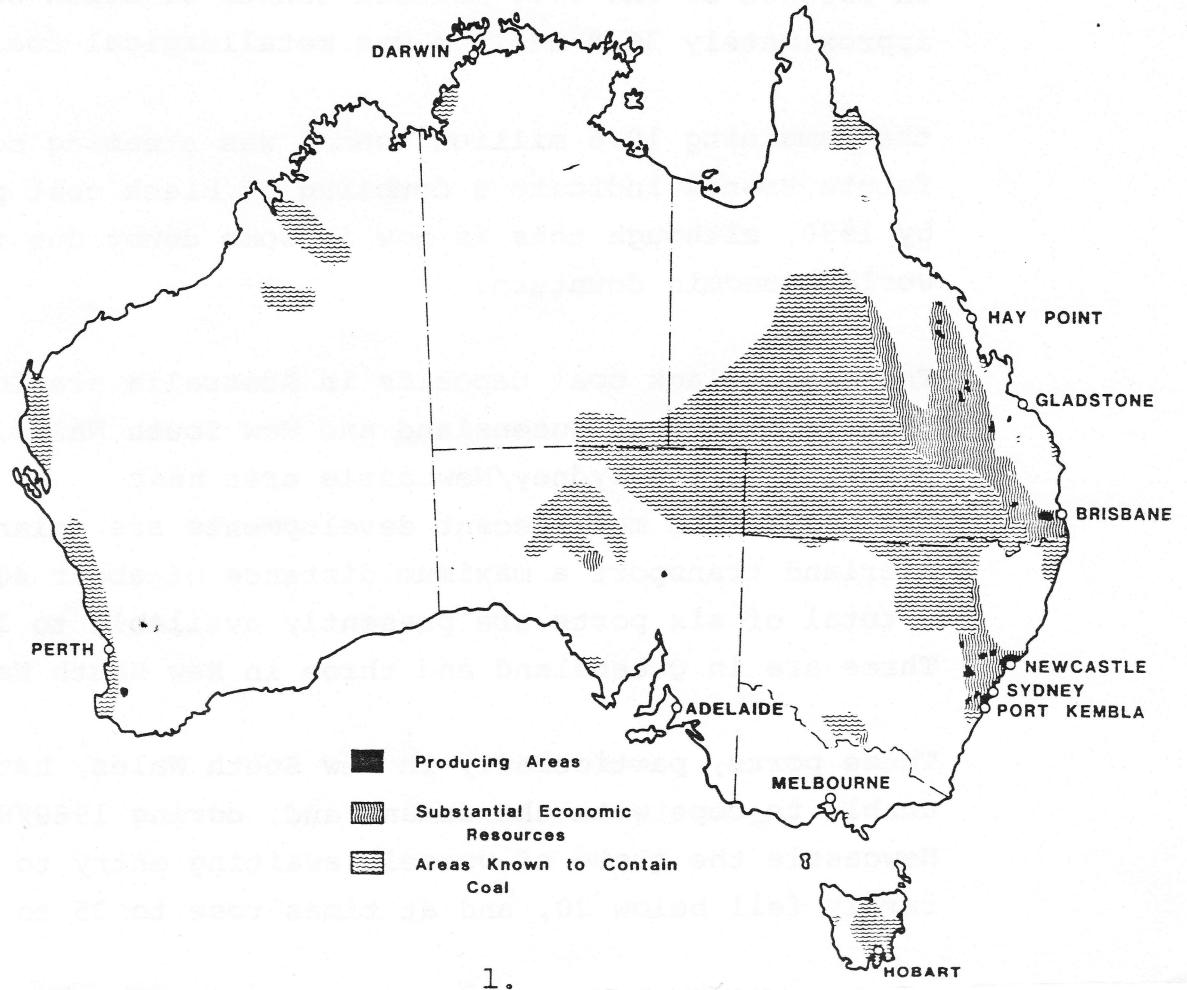
Australian coal resources are extensive, as shown in Figure 1. The measured and indicated reserves of recoverable (raw coal) being reported in 1980/81 as 28.8 billion tonnes with inferred resources in-situ being very large (NSW alone has 490 billion tonnes). Fresh coal deposits are being discovered at an escalating rate with large lignite bodies in South Australia and Western Australia providing further potential development as energy sources for electricity generation.
AUSTRALIAN BLACK COAL RESOURCES
Figure 1
More than half of Australian black coal is exported as can be seen below:
Black Coal Supply and Disposal, Australia
('000 tonnes)
(Joint Coal Board, 1982)
| Net | Stock at | |||
|---|---|---|---|---|
| Year | Production | Exports | Consumption | End of Year |
| 1976-77 | 69 550 | 35 372 | 32 188 | 14 954 |
| 1977-78 | 71 014 | 37 911 | 32 555 | 15 502 |
| 1978-79 | 73 373 | 38 278 | 33 431 | 17 166 |
| 1979-80 | 73 594 | 43 161 | 35 624 | 11 974 |
| 1980-81 | 87 387 | 47 439 | 37 712 | 14 216 |
The major local consumers of black coal are the power generating authorities who account for about two-thirds of the local consumption. The above figures are for black coal consumption only. A further 32 million tpy of lignite is consumed by the State Electricity Commission of Victoria. In 1980/81 of the 47.4 million tonnes of black coal exported, approximately 36.8 million was metallurgical coal and
the remaining 10.6 million tonnes was steaming coal. The future trends indicate a doubling of black coal production by 1990, although this is now in some doubt due to the world economic downturn.
The major black coal deposits in Australia are located in the eastern states of Queensland and New South Wales, with large deposits in the Sydney/Newcastle area near the coast. The more recent developments are inland with overland transport a maximum distance of about 400 km. A total of six ports are presently available to load coal. Three are in Queensland and three in New South Wales.
These ports, particularly in New South Wales, have been unable to cope with the demand and, during 1980/81 at Newcastle the queue of vessels awaiting entry to the loader rarely fell below 20, and at times rose to 35 to 40.
The planned port expansions are:
| Million Tonnes | ||
|---|---|---|
| 1980/81 | Future 1983 | |
| Newcastle | 13.9 | 25.0 |
| Port Kembla | 6.5 | 14.3 |
| Sydney | 3.3 | 5.2 |
| 23.7 | 44.5 | |
Over 51 percent of black coal is transported by rail and in New South Wales nearly 30 percent is transported by road and the remaining 19 percent is transported by conveyor for direct supply from mine to power plant.
The costs of transporting coal by the State owned railroads have recently escalated significantly with a 25 percent increase in freight rates and costs up to 9 cents per tonne/km are reported for the Hunter Valley region.
Transportation of coal by slurry pipeline in Australia is under consideration by a number of companies. However, to date, no systems have been installed or are even to the definitive engineering stages. Up to 1978, the major export was for metallurgical coal. The majority of infrastructures were in existence and alternative transportation systems were not required. With the growing expansion of steaming coal production in the early 80's slurry pipeline technology alternatives do offer an attractive alternative.
This paper discusses coal slurry system parameters, specification of coal products, and considers the slurry pipeline options available in the Australian context.
The transportation of solids over long distances by slurry pipeline has been successfully applied to a wide range of materials, including coal, iron ore, limestone, phosphate and other minerals. Australia, New Zealand and the Pacific Islands region have been prominent in the number of successful long distance systems whose accumulated operational experience now extends to over 45 years.
The number of world firsts in the region include Savage River Iron Ore Pipeline (1967), (McDermott et al, 1968,) Waipipi Ironsands Ship Loader (1971), and Bougainville Copper Pipeline (1972) (Piercy and Cowper, 1981). The world's largest and longest coal slurry pipeline is the Black Mesa pipeline system in Arizona, USA. This system transports over 5 mtpa of coal over 440 km in a 457 mm pipeline to feed a 1500 MV power plant located at Mohave, Nevada, USA. The Black Mesa system has successfully operated since August 14, 1970 and has consistently achieved an availability in excess of 99 percent.
Larger systems are now being developed in the USA based on proven technology developed for the Black Mesa pipeline.
In Australia the tendency has been to install power generating stations near the mine mouth and to transmit the energy by high voltage transmission lines. Use of a slurry pipeline would permit the power station to be situation near the coast thereby conserving inland fresh water supplies.
A number of power supply authorities in Australia have investigated the fine coal slurry option as an alternative to rail coal or mine mouth generating plant and H.V. power line transmission. One study (Dawson & Sargent, 1975) concluded that the slurry pipeline option was the cheapest.
However, the conventional slurry pipeline does have some disadvantages in that preparation of a fine (1 mm x 0) coal slurry at the mine site as well as coal separation at the terminal is expensive and impacts the unit transportation
cost, setting the lower limit of competitiveness with alternative transportation modes for low annual tonnage and short distance.
A further disadvantage in the Australian context is that the coal is much finer than usual export coal - which is minus 50 mm - so that existing handling facilities may need modification. Furthermore, the particle size is significantly finer than the minus 6 mm size typically required for metallurgical coal. Because of these factors alternative options have also been investigated such as oil agglomeration, medium 6 mm x 0 coal, coarse coal, stabilized slurries and special vehicles.
3.0 CONVENTIONAL FINE COAL (1 mm x 0) SLURRY
The conventional system transporting 1 mm x 0 coal was developed following a number of considerations. The prime consideration was based on the lowest cost pumpable coal slurry. The operating velocities were established to allow transportation in the optimum range of pumping energy and pipeline cost. These systems were installed for pumping of steaming coal and therefore the 1 mm top size was not detrimental in that it was still coarser than the -300 micron PF fuel burnt in a power station.
A typical system flow diagram for 1 mm x 0 fine coal slurry system is shown in Figure 2.
The slurry is prepared in an open circuit series impact crushing operation. This process maintains the required top and intermediate sizes in the slurry while creating sufficient fines to provide the rheology (fluid properties) to transport the coarse particles in turbulent flow at optimum velocity. The size consist of 1 mm x 0 with about 20 percent minus 45 microns is of fundamental importance for the system hydraulics.
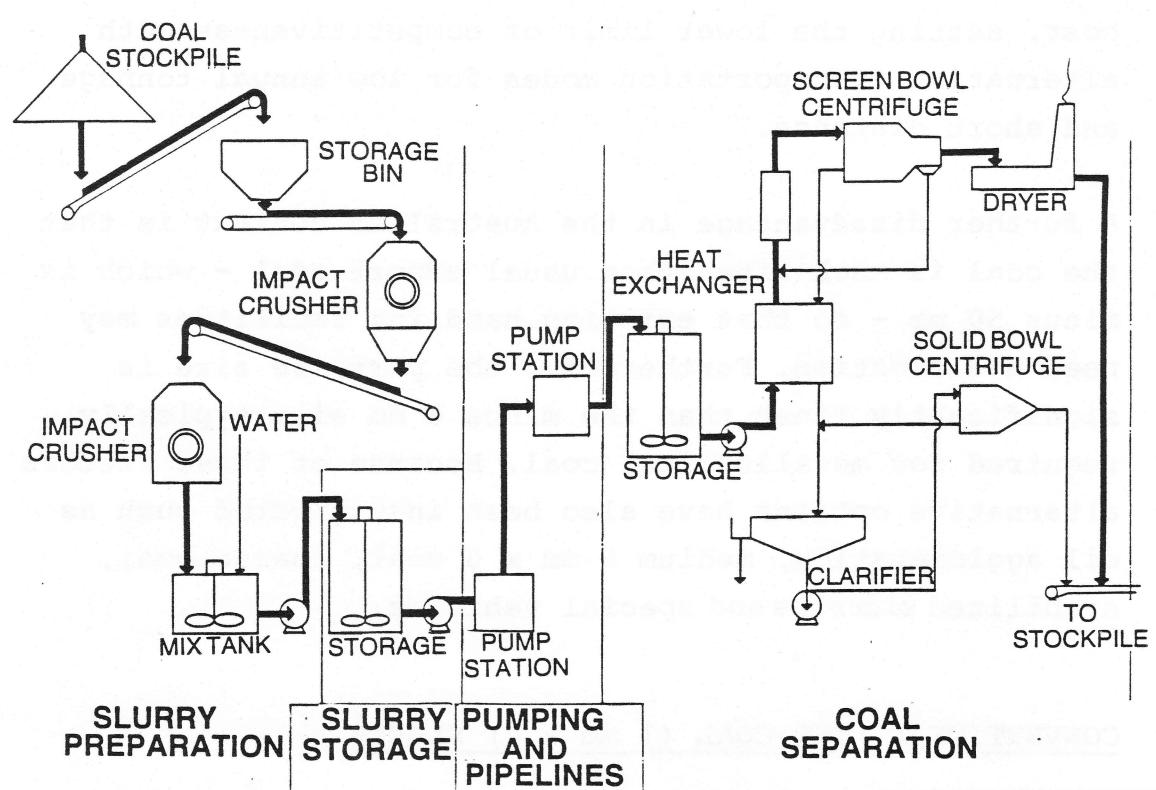
FIGURE 2
CONVENTIONAL
1 mm x 0
FINE SLURRY SYSTEM
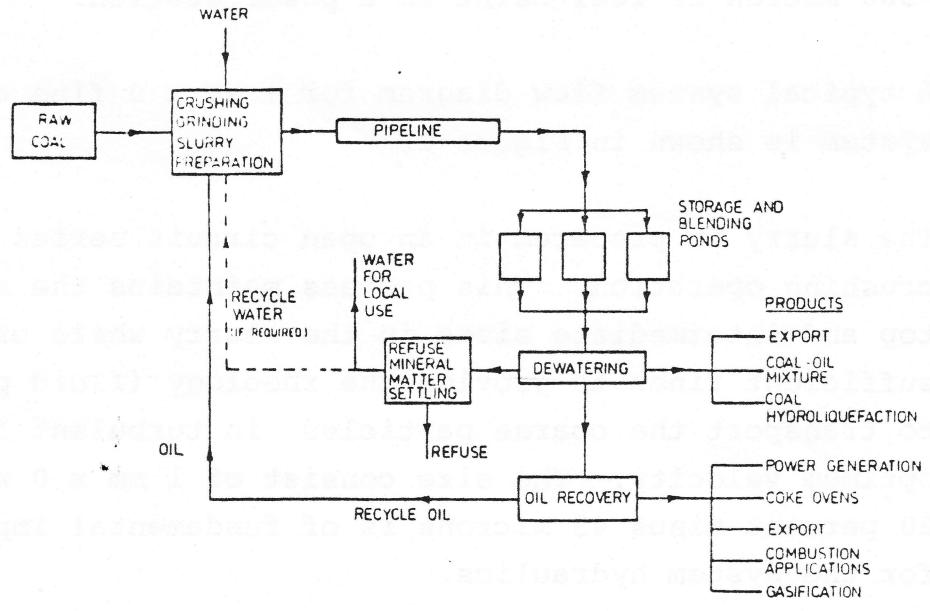
Fig. 3. Schematic diagram of the IPTACCS process
The slurry is a coal/water mix in approximately 50:50 ratio by weight. The mix ratio varies with the rank of coal being transported. Low rank coals are transported at lower percentage of bone dry solids as more moisture is inherent (ie, locked up in the coal). For steaming application the slurry system is closely coupled with the power station and the coal is handled in slurry form right up to the burner face at the power station. The major dewatering takes place mechanically immediately above the pulverisers. The concept of power plant handling in slurry form is attractive in that it solves a number of environmental questions.
-
Particularly
- a) dust control
- b) instantaneous combustion in storage
- c) reduced cost of Bunkers
The conventional 1 mm x 0 system either with coal handled in slurry form to the burner face or coal separation and conventional handling offers an alternative to existing modes of transport in Australia to local power generation facilities. All aspects of the technology are commercially proven. Operating velocities are in the range to and for a typical 3 million tonnes per year example the pressure gradient could be around in a nominal 400 m diameter pipe.
With the positive displacement pumps normally used this could mean a pump station about every 100 kms. Pipe corrosion rates could typically be 0.05 mm/year.
4.0 FINE COAL - OIL AGGLOMERATED
This option is being actively investigated by a joint venture arrangement between the Broken Hill Pty Co Ltd and B.P. Australia Ltd under the name Integrated Pipeline Transport and Coal Cleaning System (IPTACCS). The system has been described in detail by Rigby and Callcott (1978) and Rigby et al (1982) and is shown schematically in Figure 3.
Briefly, the coal is reduced to a size distribution suitable for the specific application, typically minus 0.5 mm, and mixed with water and oil to produce a fine coal slurry. The operation relies on the oil and comminuted coal particles being hydrophobic and so separating freely from the hydrophilic minerals. The individual coal particles form small agglomerates with the oil. On transportation of this slurry through the pipeline the small agglomerates change into larger, relatively strong agglomerates which may be up to 3-4 mm in diameter.
These are simply recovered by pumping the slurry over a dewatering screen. The underflow from the screen carries the reject mineral matter.
In contrast to conventional coal preparation operations, the refuse contains virtually no coal matter. As an example, one raw coal that contained 50% mineral matter (45% ash), yielded a product containing 8 to 10% mineral matter (7 to 9% ash) and a moisture of 8 to 10% after dewatering. Less than 1% of the original coal matter was lost in the refuse whereas conventional washing of this coal could result in losses of 15-20% of the coal matter.
A variety of products can be made by the IPTACCS process. Most often the products from trials have been small, near spherical agglomerates of fine coal particles. Product in this form can be used directly where the value of the oil can be recouped, for example as a feed for the preparation of coal-oil mixtures.
In cases where it is uneconomical to leave the oil in the product, this oil can be recovered and recycled. Several alternative oil recovery systems have been developed and tested at the smaller pilot plant levels of operation. The particular system used in the long term will depend on the type of product required as well as the type of coal and the quality of the product agglomerate. By varying the type of oil it is possible to reduce the residual oil level to less than 0.2 to 0.5% (by weight of coal).
The major advantages of the system are that beneficiation and transport are integrated and de-watering of the slurry after pipelining is far easier than conventional fine coal slurries and results in a low moisture product. Since the coal is ground fine, pumping pressures are low and comparable with the Black Mesa type operation. In the case of steaming coal, studies have shown that the IPTACCS process can have considerable advantages over conventional slurry pipelines. Much of this advantage is due to the integrated nature of the IPTACCS process whereby necessary operations leading to delivered pulverised fuel largely accomplish beneficiation.
In cases where the coal requires no beneficiation the oil agglomeration and recovery process may be attractive in various applications including hybrid systems to de-water and upgrade ultra fine fractions of the pipelined coal. Examples would be the centrates from the centrifuges in a fine coal system and the "vehicle" portion of a stabilised slurry.
In situations where the full value of the oil can be recouped the IPTACCS option is very attractive. Examples of this are the use of the IPTACCS product for coal-oil mixtures and coal hydroliquefaction feedstock. For other cases the suitability of IPTACCS obviously hinges on the economics of oil recovery. This is currently being evaluated in a 12-15 tonnes/hr demonstration plant.
In the Australian context the IPTACCS option is particularly attractive since conventional washing of many of the high ash coals can only be achieved at the expense of low yields and high product moisture levels. Most Australian coal produced is exported. In this regard IPTACCS offers the unique combination of low pumping pressures, similar to fine coal slurries together with the easy handleability of lump coal.
5.0 MEDIUM (6mm x 0) COAL SLURRY
To reduce the de-watering costs associated with the fine coal slurry whilst still maintaining a relatively low operating velocity and pressure gradient and allowing the same positive displacement pumps to be used, a 6 mm x 0 coal slurry has been investigated. This would have the additional benefit of being closer to the size required for coking coal. In order to obtain suitable pumping characteristics with this coarser top size a bi-modal size distribution is required such that the fine level is maintained at 20 - 22% -45 microns. In addition the solids concentration must be increased to around 60% by weight. The aim is to obtain a stable slurry pumpable at between 2 to 2.2 ms -1 under turbulent flow conditions. A typical system flow diagram for 6 mm x 0 Stabilised Slurry System is shown in Figure 4.
For the 3 Mtpa example a pipe of 300mm nominal diameter would be required with a resulting pressure of around 200 Pa m -1 i.e. a pump station about every 50 kms.
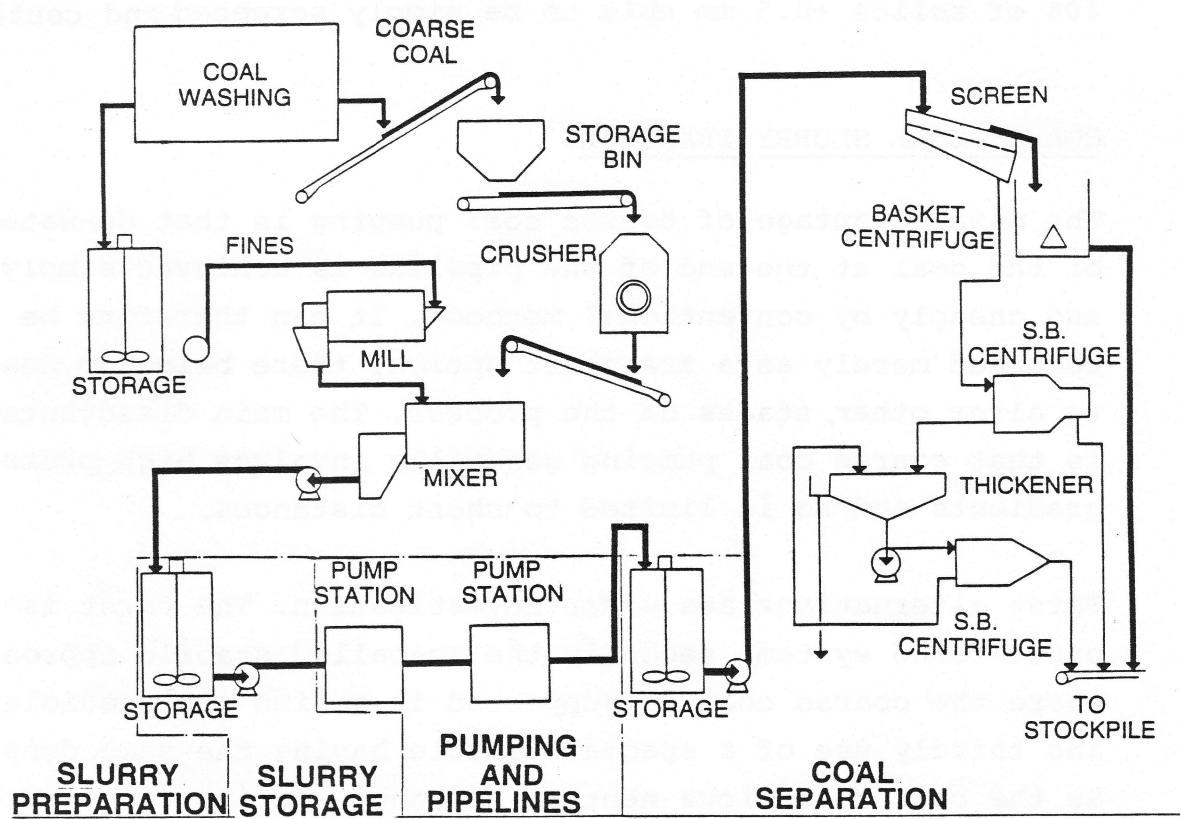
FIGURE 4
MEDIUM COAL
6 mm x 0
STABILIZED COAL SLURRY SYSTEM
The big advantage of this option is that it is merely a stretching of existing technology, ie. the same pumps and operating procedure are used as in the fine coal case. Also the pipe wear rates will be similar. Because of the coarser size de-watering will be cheaper with the approximate 40% of solids +0.5 mm able to be simply screened and centrifuged.
6.0 COARSE COAL SLURRY TRANSPORT
The main advantage of coarse coal pumping is that de-watering of the coal at the end of the pipeline is achieved simply and cheaply by conventional methods. It can therefore be regarded merely as a transport option, there being no need to alter other stages of the process. The main disadvantage is that coarse coal pumping generally involves high pressure gradients and so is limited to short distances.
Three alternatives are under investigation. The first is a brute force system, secondly the so-called stabflo approach where the coarse coal is supported in a fine coal vehicle, and thirdly use of a special vehicle having the same density as the coal to achieve neutral buoyancy.
6.1 Brute Force System
Typically, Australian export coal is minus 50mm with a median particle size of around 8 mm. To pump such material requires very high pressure gradients and high velocities, especially in large diameter pipes. The high velocities cause very high pipe wear rates. A typical application might be to transport 3 million tonnes per year a distance of say 5 km. At a concentration of 30% by weight the pressure gradient would be around requiring 15 centrifugal pumps in series. This pressure gradient is about 7 times that of a fine coal slurry in the same size pipe. Operating velocity would be around causing a likely wear rate of up to 15 mm/year in steel pipe and then only if the pipe is regularly rotated. Use of special lined pipe could improve this situation.
From these figures it can be seen that this option is only feasible for very short distances. Assuming 50% pumping efficiency specific energy consumption would be 1.6 kw hr/tonne km.
6.2 Stabflo Option
This concept involves use of a fine coal vehicle having a rheology such that the coarse coal is prevented from settling and is transported under laminar flow conditions at low velocities. Elliot & Glidden (1970) were among the first to test this type of slurry and their work prompted the study of Lawler et al (1978). The latter authors were very enthusiastic about the concept but Thomas (1979) cautioned about extrapolating their vertical pipe results to horizontal pipes. Caution is further warranted when it is remembered that Elliot & Glidden were mostly concerned with -3mm coal and it is believed that their 250 mm pipe results, which exhibit such low gradients, were in fact for this size coal. This is a far cry from 50 mm coal.
Under this concept the same 50 mm top size coal would be pumped in a fine coal vehicle. Typical flow diagram is shown in Figure 5. Studies indicate that typically the concentration of fine coal (minus 0.5mm) in the vehicle would need to be around 40% by weight. Addition of coarse coal would take the total concentration to around 70%. Approximately 43% of the coal would be minus 0.5 mm; this being either recovered at the end of the pipeline or else recycled via a smaller return pipeline.
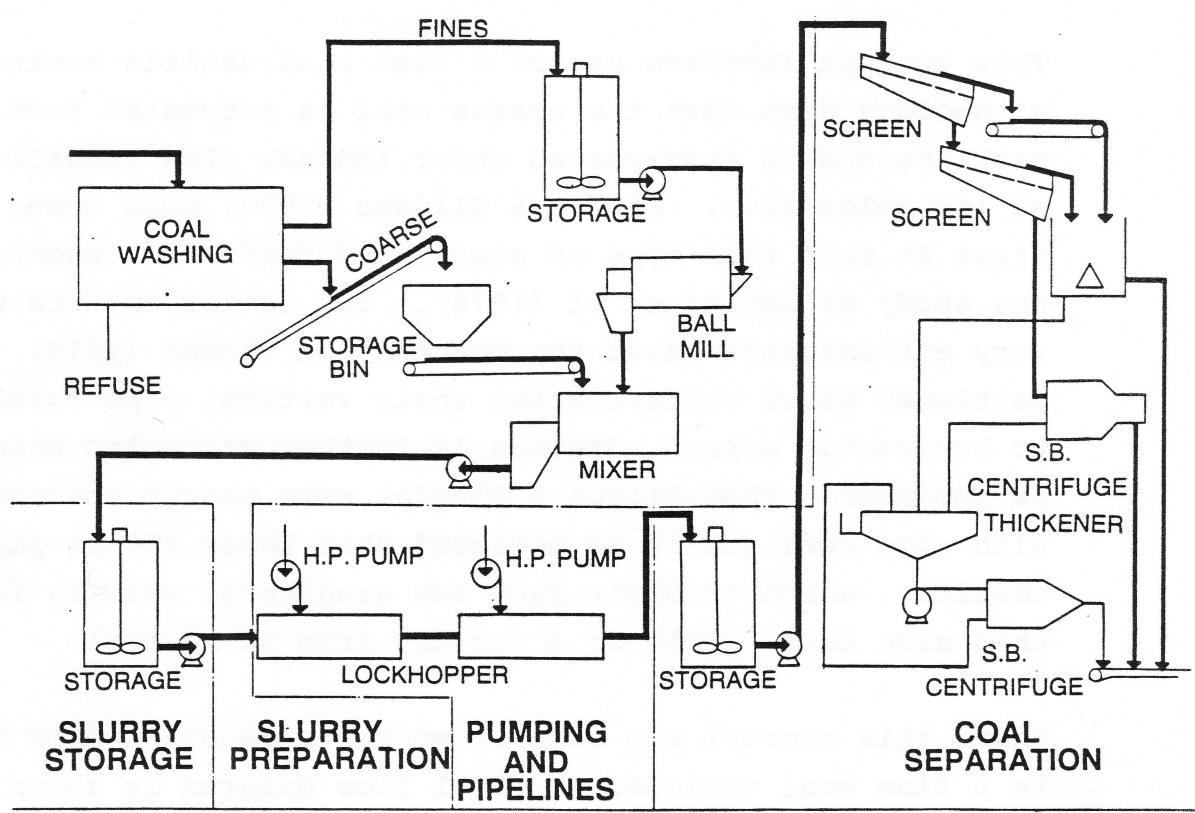
FIGURE 5
COARSE COAL
20 mm x 0
STABILIZED COAL SLURRY SYSTEM
The pressure gradient required to pump a stabilised slurry cannot be exactly ascertained at present and several research projects in Australia are currently looking at this problem. However, the authors believe that the pressure gradients proved to be similar to the brute force system. In the present case at an assumed pumping velocity of a nominal pipe diameter of 400 mm would be required. Under laminar flow conditions the expected pressure gradient is and energy consumption, assuming 50% pump efficiency, 0.95 kW hr/tonne km.
The indicated diameter of the return line, if used, is 250 mm with a pressure gradient of around . Energy required would be 0.28 kW hr/tonne km. Total energy consumed in main and return lines would therefore be 1.23 kW hr/tonne km. This is only marginally better than the brute force system but capital cost would be significantly higher due to the return line and additional handling facilities such as thickeners. The major advantage over the brute force system would be that pipe wear would be reduced dramatically, perhaps by a factor of 15. This would allow reasonable pipe life expectancy without any requirement for rotating the pipe.
6.3 Special Vehicle.
The concept of using a magnetite type slurry as the vehicle to create a density so as to cause the lumps of coal to be neutrally buoyant is being developed. This would typically require a magnetite concentration of about 35% by weight. For every of slurry some 0.35 tonnes of coal would be added taking the total solids concentration to 53%. At a typical velocity of such a slurry would have a pressure gradient only about 30% higher than for water. In the present case this indicates a 450 mm pipe with a pressure gradient as low as . Energy consumption would therefore be around .05 kw hr/tonne km. The return pipeline would be 300 mm diameter with a pressure gradient of about with a similar energy consumption of .055 kw hr/tonne km. A typical flow diagram is shown in Figure 6.
These pressure gradients are very favourable. For example, over 5 km, instead of the 15 pumps required for the brute force system, only 1 or 2 would be required. It can thus be seen that this concept is likely to be economical over quite reasonable distances, say 20 to 30 kms, in contrast to the brute force and stabflo options. At the end of the pipeline the coal would be separated from the magnetite vehicle by a simple screening operation. Any contamination of the vehicle with fine coal could be overcome by a constant bleeding of vehicle to a cleaning plant employing magnetic separators as currently used in heavy media washeries.
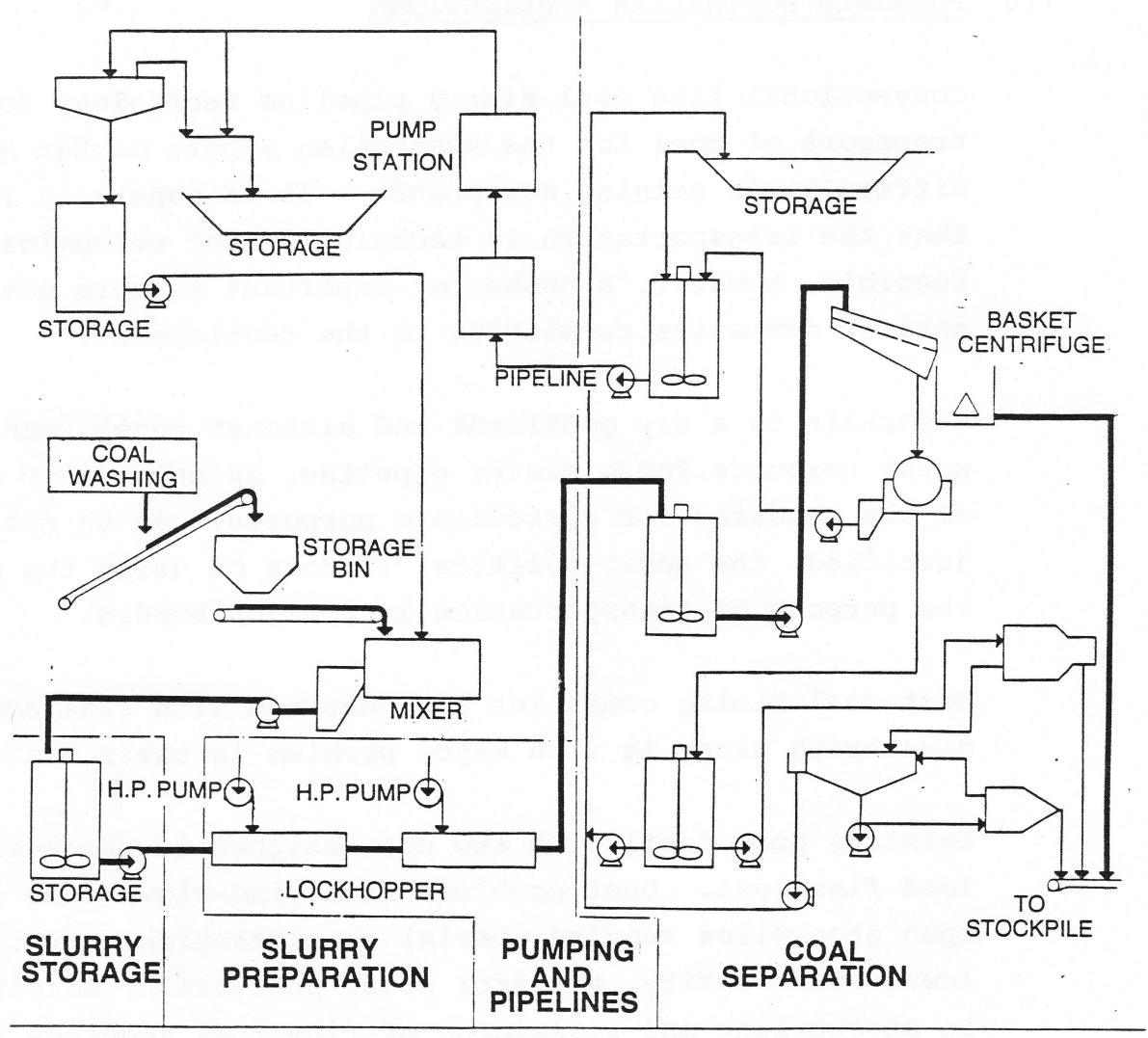
FIGURE 6
COARSE COAL
SPECIAL VEHICLE SLURRY SYSTEM
7.0 POSSIBLE AUSTRALIAN APPLICATIONS
Conventional fine coal slurry pipeline technology for overland transport of coal for the Australian export market has difficulty in gaining acceptance. It is generally recognised that the transportation is technically and economically feasible, however, a number of important factors mitigate against companies committing to the development.
Australia is a dry continent and although development of a water resource for a slurry pipeline, as opposed to development of the resource for agriculture purposes, can be economically justified, the socio-political factors of using the water for the purpose of transportation is a major hurdle.
Most coal mining companies are concerned with fine coal dewatering since it is a major problem in their own operations.
Existing port facilities are not designed to stockpile and load fine coal. Dust problems from wind-blown fine coal on open stockpiles require special consideration. Problems of lower bulk density, transfer point protection, moisture control in stockpiling and reclaiming of fine coal requires indepth evaluation.
It is technically feasible to store the coal at the port site in slurry form and to load direct onto ships via economical single point mooring systems offshore. However, dewatering fine coal onboard the ship is difficult. The water transported with the coal could be as high as 40 percent, penalising the cost of ocean transport.
The incentive is to look for technical alternatives to fine coal systems by developing oil agglomeration and coarse coal slurry transport systems with the medium size 6 mm x 0 coal pumping being an intermediate step. The available options are compared in Table 1 Comparison of Coal Slurry System Alternatives.
TABLE 1
COMPARISON OF COAL SUJURY SYSTEM ALTERNATIVES
| SYSTEM | ENERGY | FLOW | TECHNICAL | EXPORT PRODUCT | ASH | REMOVAL | ||||
|---|---|---|---|---|---|---|---|---|---|---|
| PREPARE | PUMP | SEPARATE | REGIME | DEVELOPMENT | HANDLING | FREE | MARKET | |||
| Conventional | ||||||||||
| 1mm x 0 | High | Low | High | Turbulent | Proven | Modified | 18 - 22 | No | No | |
| IPTACCS | ||||||||||
| 0.5mm x 0 | High | Low | Low | Turbulent | Proven | O.K. | 10 | Yes | Yes | |
| Medium | ||||||||||
| 6mm x 0 | Medium | Medium | Medium | Turbulent | Extension of Proven Equipment | Modified | 17 - 21 | No | No | |
| Brute Force | ||||||||||
| 20mm x 0 | ||||||||||
| Conventional | Low | High | Low | Turbulent | Proven | O.K. | 6 - 8 | Yes | No | |
| Stabilised | ||||||||||
| 20mm x 0 | Medium | High | Medium | Laminar | Hydraulic Test Required | O.K. | 15 - 18 | Yes | No | |
| Special Vehicle | ||||||||||
| 20mm x 0 | Low | Medium* | Low | Turbulent | Hydraulic Test Required | O.K. | 10 - 14 | Yes | No | |
As can be seen in Fig. 1, Australian coal deposits lie within about 400 kms of the coast. In addition the biggest coal reserves lie along the most heavily populated Eastern seaboard so that there is little requirement for trans-continental pipelines as are currently being considered in the U.S.A. Thus both for local consumption and for export the largest pipeline length is not likely to exceed about 400 kms.
The possible pipeline would probably fall into one of two categories:
- (i) less than 50 kms - e.g., Clarence-Moreton basin in Queensland, and the lower Hunter and South Coast regions in N.S.W.;
- (ii) 200 to 400 kms - e.g., Bowen basin in Queensland and the upper Hunter region of N.S.W.
In addition to the length of the pipeline, the other factors to be considered are whether the coal is for local consumption or for export and whether for steaming or coking. For coking applications the fine coal option must be excluded since the particle size is too small. Apart from this consideration for the short, 0 to 50 kms, cases all options can be considered. For the other category of 200 to 400 kms length, only the fine coal, the oil agglomeration, the medium coal and possibly the special vehicle coarse coal options appear relevant. The higher the ash of the coal and the more difficult it is to wash conventionally, the more favourable oil agglomeration becomes as explained by Rigby et al (1982).
A big advantage of slurry pipelines is that for export coal they need not necessarily be limited to the existing six coal loading facilities. The use of a single point mooring buoy with a transfer pipe on the sea bed has proved very successful with a number of different commodities and is being investigated for loading of coarse coal in Australia.
Transport distances to offshore loading site increases the options for short length pipelines. The pipeline loading alternate is compatible with all types of coal products independent of coal size although with the fine coal slurry there is an economic penalty because of the high residual moisture levels. The stabilized and special vehicle options would probably involve dewatering at the coast and then shiploading by a brute force system. There is a number of ongoing research projects into slurry pipeline development in Australia and we would expect to see one or two systems being installed by 1986/87.
REFERENCES
Elliot, D.E. and Gliddon, B.J. (1970) 'Hydraulic Transport of Coal at High Concentrations', Hydrotransport 1 Conference, Coventry, England.
Dawson, K. and Sargent, M.A. (1975) 'Energy Transportation - A Case Study for the Electricity Supply Industry', Proc., Thermofluids Conference, Brisbane (org. by I.E. Aust.).
Joint Coal Board (1982) Black Coal in Australia 1980-81 - A Statistical Year Book , Sydney, March 1982.
Lawler, H.L., Pertuit, P., Tennant, J.D. and Cowper, N.T. (1978) 'Application of Stabilized Slurry Concepts of Pipeline Transportation of Large Particle Coal', Proc., 3rd Intl. Tech. Conference on Slurry Transportation, Las Vegas, U.S.A., pp 164-178.
McDermott, W.F., et al, 'Savage River Mines - The World's First Long Distance Iron Ore Slurry Pipeline', Soc. Mining, Full Meeting Preprint 68-B-364 (Sept. 1968).
Piercy, P. and Cowper, N.T., 'Bougainville Copper Limited Concentrate Pipeline - 9 years of Successful Operation', Journal of Pipelines , 1 (1981) pp 127-138.
Rigby, G.R. and Callcott, T.G. (1978) 'Coking Coal Transport: The Use of Oil Agglomeration Techniques to Overcome Recovery Problems', Proc., 3rd Intl. Tech. Conference on Slurry Transportation, Las Vegas, U.S.A. pp 86-92
Rigby, G.R., Jones, C.V., Mainwaring, D.E., and Thomas, A.D. (1982) 'Slurry Pipeline Studies on the BHP-BPA 30 Tonne per Hour Demonstration Plant', Hydrotransport 8 Conference, Johannesburg, South Africa.
Thomas, A.D. (1979) 'Pipelining of Coarse Coal as a Stabilized Slurry - Another Viewpoint', Proc., 4th Intl. Tech. Conference on Slurry Transportation, Las Vegas, U.S.A. pp 196-205.