This HTML edition contains selectable text extracted from the original PDF. Layout-aware OCR was used to recover reading order, figures and equations; minor recognition errors may remain. Consult the PDF for the authoritative layout, figures and equations.
Stabilised laminar slurry flow: review, trends and prognosis
A D Thomas, Slurry Systems Pty Limited, Australia
L Pullum, Private Consultant, Australia
K C Wilson, Queen's University at Kingston, Canada
The first conference of the Hydrotransport series marked the introduction of the concept of pipeline transport of stabilised slurries --concentrated mixtures consisting of coarse particles in a carrier fluid loaded with fine solids. These slurries, which appear to convert as laminar flows, include coarse coal in fine coal, co-disposal suspensions and high-concentration back-fill slurries. Recent years have seen renewed interest in this concept, partly caused by advances in thickener technology, which now allows the carrier fluids to be generated readily, and partly associated with environmental and economic pressures leading to higher-concentration waste deposition. This paper presents a historical review of developments in this technology over the past three decades, identifying the physical mechanisms pertaining to flow of non-Newtonian fluids, and presenting recent work for predicting particle fall velocities in such media. Current trends are discussed, and new instrumentation techniques and possible future uses of this mode of transport are outlined.
1. INTRODUCTION
Early applications of slurry transport conveyed solids of two distinct types. For convenience, these may be called sand slurries and clay slurries. For sand slurries at moderate solids concentration, flows of commercial interest will be turbulent. Pressure gradients for sand slurries are usually estimated by taking the gradient for an equal volumetric flow of carrier fluid and adding a 'solids-effect' term. For fine sands, the flow is assumed to be homogeneous, and the solids effect is based on the 'equivalent-fluid' model. For coarse sands, the flow is classified as heterogeneous, implying that the solids concentration profile will show some degree of stratification. Further information is given in texts such as that of Wilson et al. (1997).
In clay slurries the solids are expected to be uniformly distributed throughout the flow. This flow will usually be laminar for part or all of the velocity range of commercial interest, and such laminar flows are usually strongly non-Newtonian. As shown by the early work of Rabinowitsch (1929) and Mooney (1931), a single plot of wall shear stress versus 8V/D (where is the mean flow velocity and is the internal pipe diameter) applies to all laminar flows of a given slurry, and this relationship can be used to scale from one pipe size to another. Turbulent flows of non-Newtonian slurries, and the transition between laminar and turbulent flow, were analysed by Wilson & Thomas (1985) and Thomas & Wilson (1987). For a summary see the text of Wilson et al. (1997).
The 1970's saw significant advances both in the practice of pipeline slurry transport and in its analysis. It was found that higher solids concentrations and broader particle grading could be commercially attractive. In 1970, the first conference of the well-known Hydrotransport series was held, and at this conference Elliot & Gliddon (1970) presented a paper describing their work on pumping highly-concentrated mixtures of coarse and fine coal under laminar flow conditions. This type of flow was later called "stabilised flow" by Lawler et al. (1978) who further shortened it to 'Stab-Flo'. Central to the concept of stabilised flow was the belief that the laminar flow pressure gradients could be scaled up to larger pipe sizes in accord with the Rabinowitsch-Mooney relationship mentioned previously, using a curve obtained from small-pipe data. On this basis stabilised flow appeared to offer ever-reducing pressure gradients with increasing pipe size, implying major economies for transport in larger pipes.
A contrary viewpoint was expressed by Thomas (1978, 1979a, 1979c, 1981), who was probably the first to have considered the possibility that deposition under laminar-flow conditions might affect the scaling of pressure gradients and that settling might occur progressively along the pipeline length. During the 1970's laminar flow with coarse particles in high-viscosity Newtonian fluids had been investigated by Shook et al. (1973) and Thomas (1979a). Shook et al. (1973) presented data showing deposition under laminar flow but did not discuss this matter further. Thomas (1979a) presented data and incorporated these into his discussions regarding laminar-flow deposition of coarse particles in clay carrier fluids.
2. HISTORICAL REVIEW, PART 1 – PIPE LOOP RESEARCH
The paper of Elliot & Gliddon (1970), mentioned above, placed great emphasis on attaining a particle size distribution that can produce maximum packing density, which is stated to produce a minimum pressure gradient for laminar flow at high solids concentrations. Results were presented from test loops with pipe diameters ranging from 38 mm to 250 mm, using top particle sizes from 3 mm to 12 mm. Charles & Charles (1971) discussed the possible advantages of this approach, and later Lawler et al (1978) pursued the Elliot & Gliddon around 70% concentration by weight. The tests were made in a 100-mm diameter vertical pipe that acted as a tube viscometer. The results were then scaled up to the large diameter horizontal pipelines using Rabinowitsch-Mooney scaling, in order to illustrate the economic advantages over conventional pipeline transport, which could be obtained provided deposition-free flow is assumed.
During the period from 1970 onwards a number of workers investigated laminar flow of coarse particles in non-Newtonian clay mixtures. These included Charles & Charles (1971) and Kenchington (1976, 1978). None of these workers mentioned the possibility of deposition in laminar flow influencing scale up. Charles & Charles predicted laminar pressure gradients for sand in clay in a 200-mm pipe based on viscometer test results and discussed the perceived advantages compared with turbulent transport of sand in water. They did not consider the possibility of settling in laminar flow but did mention the possibility that the coarse particles might migrate to the centre of the pipe, which might actually reduce the pressure gradient.
In the 1970's considerable research into slurry transport was also conducted in the U.S.S.R. and some books were translated and published by Terraspace Inc., including Pipeline Transport of Concentrated Slurries (Smoldyrev & Safanov, 1979) and Parameters and Flow
Regimes for considered criterion for fluid.
Traynis (1984) criterion defined Thomas (1984) slurries. He under laminar laminar flow considered example in laminar flow clearly Newtonian appears in the viscometer encouraged.
In the 1988 Duckworth 1983 b; 1988 Snoek, 1988 stabilized system simplifications were design was Transport 60 mm top (UHC flow systems considered Because of akin to the work cease and unfavorable that pipeline ROM mate 95% percent so that State mobility of
3. PARTICLES
At this point mechanics Newtonian particles, laminar forces). He more comparable
Regimes for Hydraulic Transport of Coal by Pipelines (Traynis, 1977). Traynis' book considered stabilized flow and did address deposition under laminar flow conditions, giving a criterion for static particle stability based on the yield stress of the slurry used as the carrier fluid. This stability criterion will be presented in the next section.
Traynis (1977) and Duckworth et al. (1983a) expressed the view that the static stability criterion described below was sufficient to ensure that Stab-Flo would occur. However, Thomas (1979a) claimed this was not a sufficient criterion for laminar flow of sand-clay slurries. He found that a slurry for which the particles met the static stability criterion flowed under laminar conditions without deposition in a 19-mm pipe, but exhibited deposition under laminar flow in a 105-mm pipe. That the importance of settling in laminar pipe flow was not considered seriously by others at the time is at first surprising. In other disciplines, for example in aerosol research applications (Korjack & Chen, 1979), settling of particles in the laminar flow regime appears to have been taken for granted. However, these systems are clearly Newtonian, and the more complex non-Newtonian interaction under investigation did not appear relevant at the time. Settling clearly occurred in these purely viscous systems, but in the visco-plastic systems typical of the mineral industry the presence of a yield stress encouraged the view that statically stable suspensions would remain stable under shear.
In the 1980's large-scale pipe-loop tests were conducted on stabilized coal mixtures by Duckworth and his group at the CSIRO laboratories in Australia (Duckworth et al. 1983a; 1983b; 1986a, 1986b,) and by Brookes and Snoek in the BP test loop in the U.K. (Brookes & Snoek, 1986; Hou, 1986, Brookes, 1988, Brown 1988). These publications demonstrated that stabilized transport showed economic advantages. Also, during this period a new pumping system similar to a very compact Hydraulic hoist was but capable of pumping very large particles was invented by the Australian engineer Bede Boyle (Stewart 1972). This pump design was developed by ASEA Brown Boveri, later to become the ABB Mineral Slurry Transport Group, who then used this pump for large-scale test loops in Australia to transport 60 mm top-size ROM coal at ultra-high concentrations, close to 95% of the packed condition (UHC flows) with minimum fines (Bhattacharya and Imrie, 1986; Hore et al. 1990). Hybrid systems combining Stab-Flo and UHC flow were also investigated (Hore et al. 1990). Because of the lack of fines in the simpler UHC coarse-coal mixture the ASEA tests were akin to the coarse-sand and gravel tests conducted by Streat & Televantos (1976). The test work ceased towards the end of the 1980's due to problems associated with the pump design and unfavourable transport economic conditions. Experiences with the plant had shown that pipeline transport was quite stable for suspensions with broad size distributions typical of ROM material providing either the solids concentrations were kept high, e.g. between 75 – 95% percent of the packing condition, or else that a sufficiently viscous carrier fluid was used so that Stab-Flo behaviour dominated. In both instances the net result was to restrict the mobility of the particles.
3. PARTICLE SETTLING IN NON-NEWTONIAN CARRIER FLUIDS
At this point in the review it is necessary to introduce some technical material concerning the mechanics of settling of particles in non-Newtonian fluids. Particles placed in a stationary Newtonian fluid will settle, albeit sometimes at a very slow rate. (The exceptions are very fine particles, less than about 10 µm in size, which are affected by Brownian motion and surface forces). However, for particles in a stationary non-Newtonian carrier fluid the situation is more complex. In the most basic sense, the question of whether particles settle or not can be
obtained by measuring the settling velocity (or its absence) for particles in a stationary sample of the carrier fluid, but for many purposes it is convenient to have an equation that can predict the presence or absence of particle settling in terms of the rheological characteristics of this fluid.
What is required is a force balance in the vertical direction, involving the driving force provided by the submerged weight of the particle and the resisting force offered by the fluid. For an essentially spherical particle of diameter and solids density , immersed in a carrier fluid of density , the submerged weight force is given by:
where is gravitational acceleration. The resisting force must be related to the rheological behaviour of the carrier fluid, and this is traditionally expressed by the rheogram, i. e. the plot of shear stress versus strain rate . For a Newtonian fluid this is a straight line passing through the origin, but if the fluid has a yield point, , then no movement is produced until . For some materials, the rheogram is essentially a straight line passing through ; these are called Bingham plastics. (Another useful two-parameter rheogram model is that of Casson, see Wilson et al., 2003.)
The submerged weight of the particle sets up a stress field in the surrounding medium. The largest shear stress occurs at the surface of a spindle shape that encapsulates the particle (and necessarily has an area somewhat larger than the particle surface), and the shear stress diminishes with increasing distance from the particle. The particle settles only if the shear stress at the surface of the spindle equals or exceeds the yield stress . Since the area of this surface is proportional to , the following shear stability criterion must be met if the particle is not to settle:
Three groups, Traynis (1977), Thomas (1977) and Duckworth et al. (1983a) independently proposed Eq. 2 as the criterion-plastic behaviour. The coefficient must be determined empirically. It was given as: 0.083 to 0.10 by Traynis, 0.092 by Thomas and 0.10 by Duckworth et al. Because of the practical uncertainties in the determining of (and often , also), these values of are all effectively equal to 0.10. For a slurry consisting of a continuous particle size distribution the particles of intermediate size contribute to the characteristics of the carrier fluid, and the coefficient in Eq. 2 has a larger value. This was given by Thomas (1977) as . It is to be noted that in a fluid with , all discrete particles will settle, generalising the statement made for Newtonian fluids at the beginning of this section.
The next step is to move from the static stability criterion described above to the case where the carrier fluid is itself sheared by an external agency, as is typical of pipeline flow. For the static case of an unsheared medium, a reference particle shear stress can be defined, and, as shown by Wilson et al. (2003), this can be used to determine an equivalent strain rate for the particle, say . This strain rate serves to define the equivalent viscosity, , applicable to a Newtonian fluid that would produce the same particle fall velocity. A continuation of this work, covered both here and in Wilson & Horsley (2004), considers the combination of a particle in a stationary medium (with equivalent strain rate ) and the medium itself being
subjected to a
of the particle
Several basic
for
of zero
particle will
Also, if the
associated va
Note that in
rheological
associated w
viscosity, the
particle in a
that for the
Thomas' (198
between a fi
support his
were static
gap between
with substant
4. HISTO
PIPE
In visualiz
clear gel w
shear, even
by more than
In the seq
suspension
passes the
expectatio
near the d
central reg
stay near
point, esp
traveling
velocity p
subjected to an external shear rate . The resultant strain rate, , determines the fall velocity of the particle under these conditions. It is proposed that can be expressed as:
Several basic checks can be used to verify the general applicability of this relationship. Thus, for of zero, , as expected. Also, for a fluid with a yield shear stress , if the particle will not settle. This condition implies that , and thus both and are zero. Also, if the reference shear stress of the particle is well below , then and the associated value of for the particle is essentially the same as for the sheared fluid.
Note that in a sheared fluid ( ), Eq. 3 predicts that is larger than . For typical rheological behaviour, such as that given by the Bingham or Casson models, a larger is associated with a smaller . Thus the resultant viscosity is smaller than . With a smaller viscosity, the particle falls more rapidly. In other words, the proposed relation predicts that a particle in a sheared medium settles, and the fall velocity of a settling particle is greater than that for the unsheared medium. This result corresponds in general terms with the findings of Thomas' (1979b) experiments with particles settling in a clay slurry sheared by Thomas to support his findings of deposition under laminar pipe flow (Thomas 1979a). Particles which were between the rotating cylinders in recent years to settle when the slurry was sheared in the gap statically rotating cylinders. In recent years other workers have conducted similar tests with substantially similar results (Wilson 2000, Cooke 2002).
4. HISTORICAL REVIEW, PART 2 - SETTLING IN HORIZONTAL LAMINAR PIPE FLOW
In visualization studies (Pullum et al., 2001), where the carrier fluid slurry is replaced by a clear gel with appropriate rheological properties, the solids are seen to settle rapidly under shear, even when the yield stress of the carrier fluid exceeds the static criteria given by Eq. 2 by more than an order of magnitude.
In the sequence shown on Fig. 1, solids are introduced from the right as a homogenous suspension at the exit of the pump, 15D upstream of the viewing window. As the suspension passes the observer it initially appears to be confined to a central plug, reminiscent of earlier expectations of Stab-Flo. In fact these solids are being convected by the higher axial velocities near the pipe centre-line and, since the resultant viscosity is very much higher in this central region (see Section 3), their fall velocity is imperceptibly small, and so they observe to stay near the axis. Nevertheless, some settlement is occurring upstream of the observation point, especially from the outer annuli in the pipe, and a bed starts to form. This bed (which is traveling at a slower velocity than that of the axial core), when imaged at 6s, distorts the velocity profile, as shown in Fig. 2.
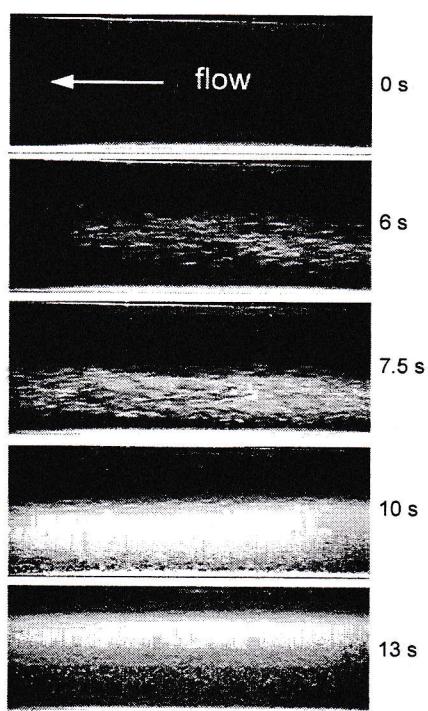
Figure 1. Stills taken from video sequence showing stratification of 2mm sand particles conveyed in a 25Pa yield stress fluid. 100mm pipe, images 15 diameters downstream of the exit from a centrifugal pump
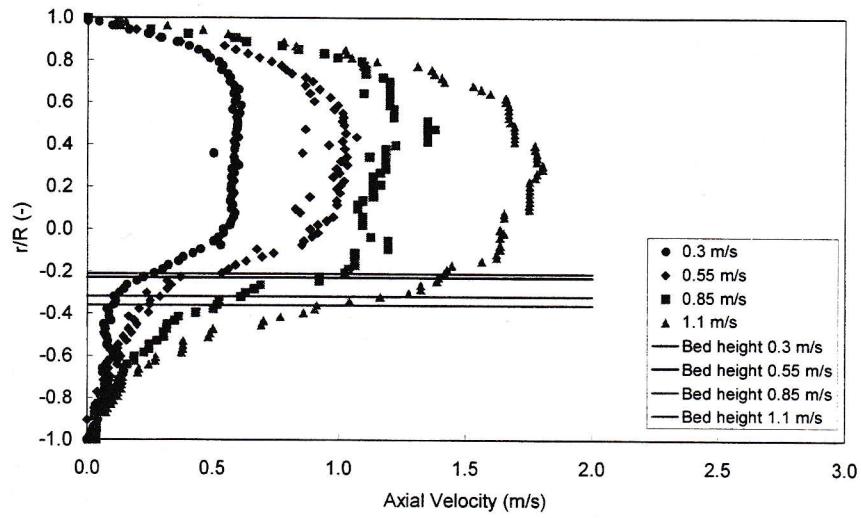
Figure 2. Fluid axial velocity profiles captured by MRI 200D downstream of the visual observation window for a statically stable "Stab-Flo" suspension.
The distortion causes which tends to decrease of solids conveyed establishment of the note that, once a be present, and this conversion is virtually all the suspension made i.e. an almost axial case, however, the of pipe, and the bed shown at 10s was stable
Thomas (1979a) and settling under laminar et al.(1979b)) warrant showed that slow solids of coarse sand in a flow homogeneous long pipeline.
There are a number of under laminar flow conditions, although further reviewed the pressure gradient in a pipeline. Urie
Pullum et al.(1996) using a sliding gradients decrease pressure gradient
Houman & Johns with top size of 1 pressure gradients accumulate. The the Kimberlitic thickened tailings that proper thickened consumed. Subset a stable stratified
Hydraulic backflow African mines. The mm in size, and gradients of 5,000 available. Cooke
The distortion caused by the bed increases the maximum velocity in the upper flow region, which tends to decrease the the average value of , there, thus increasing the settling velocity of solids conveyed above the bed. There are also secondary flows associated with the establishment of this bed, but these lie beyond the scope of the present paper. It is sufficient to note that, once a bed starts to form, the action increases so that by 10s a well-defined bed is present, and this continues to consolidate and grow as time progresses until, eventually, virtually all the solids are conveyed in the sliding bed. Observations of this particular suspension made 400D downstream of the initial viewing window showed similar features, i.e. an almost axial plug of solids at the front of the bolus of solids, followed by a bed. In this case, however, the suspended solids were further in front of the bed due to the greater length of pipe, and the bed was more consolidated over its entire length, demonstrating that the bed shown at 10s was still undergoing settlement.
Thomas (1979a) appears to have been the first researcher to consider in any detail slow settling under laminar flow along the pipeline length, although Snoek et al. (1979a) and Snoek et al. (1979b) warned that settling may be a problem in stabilized flow. Thomas (1979a) showed that slow settling described the observed behaviour in a DN 105 pipe of laminar flow of coarse sand in a Newtonian fluid and raised the possibility that a slurry which is shown to flow homogeneously in the laminar regime in a short test loop might settle and deposit in a long pipeline.
There are a number of long distance slurry pipelines that have transported fine particle slurries under laminar flow conditions. These were examined by Aude et al. (1996) who concluded that even fine particles settled slowly towards the bottom of the pipe under laminar flow conditions, although this might not occur for the first few kilometres of travel. Cooke (2002) further reviewed these operations. Clarke & Charles (1993) developed a method of predicting the pressure gradient in a slowly-settling fine-particle slurry flowing under laminar conditions in a pipeline. Uriev (1996) addressed the same problem.
Pullum et al. (1996) reviewed the ASEA test work outlined earlier, and described the results using a sliding bed analysis. For small pipe sizes the predicted and observed pressure gradients decreased as pipe size increased but for pipe sizes greater than about 250 mm the pressure gradient remained roughly constant at around .
Houman & Johnson (2002) described laminar-flow transport of high- concentration tailings with top size of 1 mm. The tailings are pumped in a DN 330 pipe. They note that if pressure gradients are greater than a settled bed will be kept in motion and not accumulate. The relatively high pressure gradients are a result of the rheological behaviour of the Kimberlitic clays used in this suspension and the pre-requisite for these co-disposal thickened tailings is that solids concentration be kept as high as possible. This ensures both that proper thickened discharge cones are produced and that as little water as practical is consumed. Subsequent analysis of this line (Pullum 2003) has shown that the line operates as a stable stratified flow under laminar conditions.
Hydraulic backfilling of underground voids is an established practice, especially in South African mines. The backfill slurries are of paste consistency, can contain particles up to 25 mm in size, and flow in apparently laminar flow regime. The extremely high pressure gradients of to are not a concern because of the large static head available. Cooke (1996) provides a good review of this technology.
5. PARTICLE SETTLING EFFECTS IN TURBULENT AND LAMINAR FLOWS
It has been demonstrated above that in non-Newtonian carrier fluids some particles will remain stationary in a static (unsheared) fluid, but settling will occur whenever there is a non-zero strain rate in the carrier fluid, a condition typical of pipeline flows. The next question to be asked is whether particles that have settled can be projected back into the flow, i.e. 'resuspended'. To deal with this question it is necessary to introduce some technical material concerning particle conversion in the two basic flow types mentioned in the introduction - sand slurries and clay slurries. Clay slurries typically involve laminar non-Newtonian flow of a uniform mixture, whereas sand slurries are comprised of a turbulent flow of water transporting discrete particles.
In sand-slurry flow there are two major mechanisms of particle support. The first is turbulent suspension, which has been the subject of early analysis by Schmidt (1932) and Rouse (1937) and experimentation by Hsu et al. (1980). Turbulent support depends on the size of the turbulent eddies exceeding the particle size, and on the velocity of the eddies exceeding the fall velocity of the particles. As the turbulent eddies are an offshoot of the mean motion of the flow, the energy of turbulence, which maintains the particles in suspension, is constantly replenished without any increase in friction gradient. This effect can be seen clearly for small sand particles with low fall velocities, such as the 0.1 mm sand used in the experiments of Korving (2002). For volumetric solid concentration, , up to 0.36, the 'equivalent-fluid' relationship mentioned in the Introduction applies, and the pressure gradient (for a throughput velocity range extending from 2 m/s to over 5 m/s) is the same as that for a fluid with density equal to that of the mixture and viscosity that of water. It follows that, for a given solids concentration and throughput velocity, the pressure drop (and hence the Specific Energy Consumption) depends inversely on pipe diameter. This diameter dependence implies that, as for clay slurries, there should be major economies of scale for larger pipe sizes.
The second transport mechanism in sand-slurry flow often moves some or all of the particles as stratified or 'contact' load. This mechanism usually dominates if the particle size and fall velocity are large compared to the size and speed of the eddies. In this case, turbulent suspension will not be effective in counteracting the submerged weight of the particles, and this weight will be carried downward by interparticle contacts until it produces a granular pressure acting on the lower wall of the pipe. In effect, the stratified particles form a bed, and keeping this bed in motion requires a force acting in the direction of flow. This force must be large enough to overcome the product of the weight and submerged weight of the pipe wall, and a substantial extra pressure gradient is required to produce this driving force. This concept was first proposed in general terms by Newitt et al. (1955), and subsequently analysed by Wilson (1976). (Summaries are presented in the texts by Wilson et al. (1997) and Shook & Roco (1991).) For given solids density and concentration, it is found that the stratified component of pressure gradient is effectively independent of pipe size (Clift et al., 1982). Thus there is no economy of scale for fully-stratified flow, and for cases of partial stratification, the two components of pressure gradient must be separated and then scaled individually (Wilson et al., 1996).
Recently there has been an increasing interest in how particles travelling near the bottom of a pipe can be 'resuspended' by being lifted into the turbulent core of the flow. Two lift mechanisms have been identified. The first is a rather weak viscous lift (usually called Saffman lift, see Saffman, 1965), applicable to laminar flow or the viscous sub-layer of turbulent flow. The second is a significantly stronger inertial lift, associated with the
logarithmic mixtures of narrow pronounced mm can be will be encountered in versely part of a turbulent details of the if the particles some effect
There is no Flo, and concentration sand in water applicability range from beyond the 0.36, 7060 kPa al., 1973). been only collapse of Note that particle discollisions, ineffective
If turbulent particles pressure gradient University counterbar specifical numerical nuclear material available. Comparis particles associated improved the greate
6. CURR
The fact become distance
AR FLOWS
some particles will ever there is a non-the next question to into the flow, i.e. technical material the introduction - Newtonian flow of ant flow of water
the first is turbulent and Rouse (1937) on the size of the dies exceeding the mean motion of the sion, is constantly in clearly for small the experiments of 'equivalent-fluid' ant (for a throughput fluid with density for a given solids Specific Energy coe implies that, as res.
all of the particles is case, turbulent in the particles, and produces a granular form a bed, and this force must be friction and the pressure gradient general terms by aries are presented solids density and effectively of scale for fully-pressure gradient
ar the bottom of a flow. Two lift (usually called cous sub-layer of sociated with the
logarithmic velocity distribution of near-wall turbulence. The significance of this lift force to mixtures of sand-weight particles in water has been covered in a series of papers. For particles of narrow grading, it was found (Wilson et al. 2000; Wilson & Sellgren 2003) that lift has a pronounced effect for particles in the size range 0.2 - 0.4 mm. Particles smaller than about 0.1 mm can be enveloped by the viscous sub-layer, where only the rather ineffectual Saffman lift will be encountered. Similarly, particles greater than about 0.5 mm are confined to the log-law part of a turbulent flow, and here the ratio of inertial lift force to submerged particle weight is inversely proportional to particle size, and thus will be ineffective for large particles. The details of the lift forces are not of concern here, since these forces are useful for support only if the particles that they can lift into the main flow will be sustained once they get there by some effective support mechanism in the core of the flow.
There is no comparable support mechanism in laminar flows, including clay slurries and Stab-Flo, and even for sand slurries it is instructive to consider what happens at very high concentrations of solids. It was noted above that Korving's (2002) experiments with 0.1 mm sand in water, turbulent support remains effective up to (as shown by the applicability of the 'equivalent-fluid' model). However, Korving's experiments extended to a range from 0.42 to 0.48, and in this range the pressure gradient shot up to values far beyond those predicted by the equivalent-fluid model. For example, at m/s and , is about , but at the same velocity and , has risen to , as would be expected for fully-stratified flow (Newitt et al., 1955; Wilson et al., 1973). If the equivalent-fluid model had applied to these conditions, would have been only about , or about 4% of that observed. What must have happened is a collapse of the turbulent eddies which had supported the particles at lower concentration. Note that at the mean spacing between the particles is only one-eighth of the particle diameter, so that in the curved flow of eddies there will be numerous particle collisions, and these necessarily create a strong damping of the turbulence, making it ineffective for particle support.
If turbulent support can collapse, even in for fine-sand slurries, it can be expected that particles that settle in a laminar flow will move as a sliding bed, with the resulting high pressure gradients and limits to economies of scale. A number of publications from the City University of New York referring to "viscous resuspension" might appear to offer a counterbalancing support mechanism. One of these papers (Zhang & Acrivos, 1994) specifically deals with fully-developed laminar pipe flow, comparing the results of detailed numerical calculations with concentration curves obtained by Altobelli et al. (1991) using nuclear magnetic resonance techniques in a small pipe. Better imaging techniques are now available, and Graham et al. (2002) complemented these by measuring pressure gradients. Comparison shows that "viscous resuspension" is the same as a stratified load of moving particles (as opposed to a stationary bed). Hence, the problem of stratified load and the associated lack of economies of scale has not been overcome. It is also worth noting that it is improved instrumentation, rather than sophisticated mathematical analysis, that has provided the greatest increases in understanding.
6. CURRENT TRENDS
The fact that large particles that meet the static stability criteria settle under shear has now become widely known. Recently, Aude et al. (1996) reviewed the operation of some long-distance fine-particle laminar flow pipelines and showed that slow settling occurs along the
pipeline length, resulting in a gradual increase in pressure gradient. For the Newtonian case it is expected that the same will happen with the coarser-particle stabilized flows; but for non-Newtonian rheology other features may require attention. For colloidal particles the interparticle forces are usually larger than the external body forces acting on the particles, but for suspensions with particles that are larger (say ) and are immersed in a fluid with a substantial structure, the magnitude of the various forces depends on the local shear field. An adequate analysis of this non-Newtonian case has not yet been achieved, and there remains an active research area as to the rate of settling, and its impact on flows where suspension rheology dominates, e.g. thickeners and all slurry flows with fine particles or wide particle-size distributions.
As noted at the end of the previous section, Graham et al. (2002) used sophisticated instrumentation to conduct fundamental studies into laminar-flow transport of coarse particles. As a result of these studies, and the work of various other writers that has been recommended stabilised flow for long-distance transport. It still has advantages for relatively short-distance transport, for example to tailings impoundments. Here the ability to stop a line and restart it at will, and to deliver very-high-concentration 'pastes' still makes a high-concentration flow an attractive means of conveying short distances with limited water consumption.
It is interesting to compare the pressure gradients and operating conditions of high-concentration flows with other forms of transport, and some typical data, taken from the literature for coal suspensions, are shown in Table 1.
Table 1 Transport properties of various coal suspensions
| Coal type | Elliot & Gliddon (1970) | Lockyear et al (1985) | Pullum & McCarthy (1996) | Alexander (1983) | Black Mesa type Schriek et al (1973) | |||||
|---|---|---|---|---|---|---|---|---|---|---|
| ROM | ROM | Coking | ROM | ROM | Coking | Coking | ||||
| (-) | 1.5 | 1.5 | 1.4 | 1.45 | 1.5 | 1.37 | 1.37 | |||
| (mm) | 3 | 12 | 40 | 60 | 100 | 1.5 | 1.5 | |||
| (mm) | 250 | 100 | 300 | 300 | 350 | 250 | 100 | |||
| (-) | 0.5 | 0.5 | 0.67 | 0.75 | 0.35 | 0.42 | 0.42 | |||
| ( ) | 1 | 1 | 1 | 1 | 4.5 | 1.5 | 1.5 | |||
| ( ) | 200 | 900 | 450 | 1000 | 1500 | 100 | 300 | |||
| ( ) | 0.07 | 0.33 | 0.13 | 0.26 | 0.8 | 0.05 | 0.15 | |||
| Regime | Lam | Lam | Lam | Lam | Turb | Turb | Turb | |||
| Stable 2 | Yes | Yes | Yes | Yes | No | No | No | |||
1. The specific energy consumption is defined as where the pressure gradient is in
2. Stable here means a transport mode that does not exhibit a minimum conveying velocity and can be shut down and re-started at will. Turbulent transport modes are characterised by a minimum conveying velocity and can block the line on restart.
The work of stabilized slurry flow is a velocity of minus minus conveyed extrapolated Elliot et al.
Lockyear et al. in a long noted that there is a slower-moving effect of sliding in essentially particle size, the ratio is .
The pressure gradient for minus (1996) and pressure gradient in a Black Mesa extremes, i.e. size in water. Here smaller than in by the Loverian transport gradient also has to be conveyed energy consumption.
If the material cannot be shut down and is inappropriately conveyed, e.g. concentration commercially conveyed energy consumption.
7. PROGNOSIS
The striking homogeneity concerning the present they concern hence were as flow or within
The work of Elliot & Gliddon (1970) appeared to permit the transport of coarse- particle stabilized slurries at low pressure gradients. For example they presented results in a 360m long DN 250 pipe loop showing laminar flow at pressure gradients as low as 200 kPa at a velocity of but the particle size was not identified. Careful examination of Elliot & Gliddon's paper shows that the majority of the work concerned minus 3 mm coal slurries. A minus 12mm mixture was pumped through a DN 100, 1.6km loop but with relatively high pressure gradients ( at ). It is almost certain that the DN 250 data apply to minus 3 mm coal, considerably finer than the 20 mm top size for which Lawler et al (1978) extrapolated Elliot and Gliddon's results.
Lockyear et al. (1985) measured a pressure gradient of approximately at in a 2 km long DN 300 test loop when pumping minus 40 mm stabilized coal slurry. They noted that there was some evidence that at the lower velocities some of the coal formed a slower-moving sliding bed. It should be noted here that for solids much denser than coal, the effect of sliding beds can be much more serious. For this configuration the pressure gradient is essentially proportional to or, for a given concentration of solids, simply to . Thus, the ratio of pressure gradients for, say, iron ore ( ) compared with coal ( ) is , and this ratio will be virtually unaffected by pipe size.
The pressure gradients measured with stabilised coal slurries can be compared with 1000 kPa for minus 50 mm coal with minimum fines transported as a sliding bed (Pullum et al. 1996) and pressure gradients of approximately 100 kPa in a DN 250 pipe and 300 kPa/km in a DN 100 pipe for turbulent transport of minus 1.4 mm coal slurry similar to Black Mesa. The stabilized-flow pressure gradients fall between these two water-based extremes, i.e. low-concentration small-particle-size and very high concentration large particle size in water. However the particle size in this last case and solids concentration is very much smaller than in the other cases and perhaps a more meaningful direct comparison is provided by the Loveridge mines turbulent transport of -50mm ROM coal (Alexander 1983). Here the transport gradient ( ) is in excess of the ultra high concentration gradients and also has to be conveyed at substantial velocity to maintain transport.
For low-concentration turbulent transport of fine particles the pressure gradients, and specific energy consumptions, are lower than for the Stab-flo form of transport represented in Table 1. If the material is already fine, or the downstream process can tolerate the material being ground to a small size, and the high water consumption is acceptable, such turbulent transport cannot be bettered by high-concentration techniques. Where low-concentration suspensions are inappropriate, e.g. in tailings and waste disposal, or where coarse particles are to be conveyed, e.g. coal export, or aggregated or co-disposal systems, stabilized or ultra-high-concentration flows offer stable forms of transport at energy consumption that can be commercially acceptable, particularly for short-distance transport.
7. PROGNOSIS
The striking similarity between the transport characteristics of Stab-Flo suspensions and homogenous non-Newtonian suspensions dominated the thinking of most early workers concerning these flows. Truly homogenous flows are axis-symmetric, and when a yield stress is present they contain an unsheared core. Stab-Flo suspensions were believed to be similar, and hence were assumed to be axis-symmetric, with the particles uniformly distributed across the flow or within the unsheared core. In accord with these assumptions such flows were assumed
to have pressure gradients that were inversely proportional to pipe size under 'laminar' flow conditions; and hence very low gradients were forecast for pipes of industrial size.
In fact the coarse particles were settling to form beds but the depth of the bed and similarity between the carrier fluid and coarse particle densities made observation difficult. Thus it seemed that the stable behaviour at entry and discharge and the apparently homogenous regime inside the pipe obscured the settling phenomenon, and hence belied the constant pressure gradients predicted by stratified analysis.
Recent work has shown that flows of coarse particles in a non-Newtonian carrier fluid do exhibit stratification, a fact that points to the need for these flows to be re-analysed using non-Newtonian stratified-flow concepts; although this is likely to present difficulties that did not occur in the earlier analyses of turbulent flows with Newtonian carrier fluids. However, any lift forces that occur under laminar flow are very small, and unlikely to be significant, for suspension of materials normally associated with the mineral industry. (For other industries, e.g. the food industry, where density differences are smaller and apparent viscosities can be much higher, this conclusion may not apply).
For relatively low-concentration slurries where the coarser particles have 'room to move', settling of particles occurs near the head of the pipe line, but with fine particle slurries this settling may take many kilometres. The settling rate will depend on the rheological properties of the slurry and the shear-rate variation across the pipe cross section. Coarser particles that have settled to the bottom of the pipe travel as stratified load, and understanding of this type of flow has been greatly advanced by modern instrumentation techniques. For higher concentration slurries, particles have less 'room to move' and the stratified load near the bottom of the pipe may be in the form of an expanded bed with the non-Newtonian 'yield stress' influencing coarse particle separation, bed density and sliding friction. These factors will need to be addressed when analysing these slurries.
Does the foregoing imply that the objective of coarse-particle transport at low pressure gradients comparable to (or below) those of turbulent fine-particle transport is unobtainable? For long pipelines the answer is undoubtedly yes. Does this mean that Stab-Flo and other high concentration flows should be abandoned? The answer is a qualified no. Stab-Flo and allied transport systems are able to convey a very wide range of particle sizes at concentrations in excess of conventional lines and up to their maximum packing condition. While the pressure gradient precludes them from most long-distance lines, they may have potential in short-distance lines, and in particular for waste disposal. The conservation of water is a challenge facing the modern world and a mode of hydraulic transport that minimises water consumption, and can be stopped and restarted at will, is a very useful one.
The future of transporting coarse particles in a fine-particle carrier fluid will require the consideration of a number of outstanding issues. Improved instrumentation and visualisation techniques have increased understanding in recent years, and further improvements are desirable to maintain progress. The work reported above on the mechanisms of particle settling in sheared non-Newtonian fluids (in connection with Eq. 3), merits a broader experimental base, and this will require additional fall-velocity experiments using a variety of fluids and shear conditions, plus pilot-plant pipeline experiments that include concentration profiles and measurement of any deposition. Another fruitful approach will be analytic modeling, using computer programs to predict concentration profiles and the variation of
pressure
effect
NOTA
SEC
REF
Alex
Alto
Aude
Bhat
Broo
Brod
Brov
pressure gradients with time and distance. The optimisation of particle size distribution and the effect of additives are also issues requiring further studies.
NOTATION
| Volumetric concentration | (-) | |
| Particle diameter | (mm) | |
| Maximum particle diameter | (mm) | |
| Pipe diameter | (mm) | |
| Submerged weight force | (N) | |
| Gravitational acceleration | ( ) | |
| Relative density of solids | (-) | |
| Specific energy consumption | ( ) | |
| Superficial velocity | ( ) | |
| Strain rate | ( ) | |
| Equivalent particle strain rate | ( ) | |
| Resultant strain rate | ( ) | |
| Strain rate of medium | ( ) | |
| Pressure gradient | ( ) | |
| Viscosity | (Pa s) | |
| Equivalent particle viscosity | (Pa s) | |
| Resultant viscosity | (Pa s) | |
| Fluid density | ( ) | |
| Solid density | ( ) | |
| Shear stress | (Pa) | |
| Resultant shear stress | (Pa) | |
| Shear stress in medium | (Pa) | |
| Yield shear stress | (Pa) |
REFERENCES
Alexander, D. W. (1983). Loveridge coarse coal slurry transport system performance and applications. 8th International Technical Conference on Slurry Transport . 429-440
Altobelli, S. A., Givler, R. C. and Fukushima, E. (1991). Velocity and concentration measurements of suspensions by nuclear resonance imaging. J. Rheol. 35 , 721-734.
Aude, T.C., Derammelaere, R.H. and Wasp, E.J. (1996) Instability of laminar flow in long distance pipelines and solutions. 21 st Int. Tech. Conf. Coal Utilization and Fuel Systems , Clearwater, FL, USA.
Bhattacharya, A., and Imrie, I. (1986). Development of the Asea mineral slurry transport system for coarse coal. Hydrotransport 10 , BHRA.
Brookes, D. A. (1988). The potential of Stabflow coal slurry pipelines - an economic study. Hydrotransport 11 . BHRA, Stratford Upon Avon, UK, 63-80.
Brookes, D. A., and Snoek, P. E. (1986). Stabflow slurry development. Hydrotransport 10 . Innsbruck, Austria, 89-100.
Brown, N. P. (1988). Three scale-up techniques for stabilised coal-water slurries. Pages 267-284 in Hydrotransport 11 , Stratford-upon-Avon, England.
Charles. M.E. and Charles, R.A. (1971) The use of heavy media in the pipeline transport of particulate solids. in Advances in Solid-Liquid Flow in Pipes and its Application , edited by I. Zandi, Pergamon Press, Oxford, U.K., 187-197.
Clarke, P.F. and Charles, M.E. (1993) A flow sedimentation model for the laminar pipeline transport of slowly-settling concentrated suspensions, Hydrotransport 12 , BHR, Brugge, Belgium, 615-628.
Clift, R., Wilson, K. C., Addie, G. R. and Carstens, M. R. (1982). A mechanistically-based method for scaling pipeline tests for settling slurries. Hydrotransport 8 , BHRA, Johannesburg, South Africa, 91-101.
Cooke, R. (1996) Design of deep mine hydraulic backfill distribution systems, Hydrotransport 13 , BHR, Johannesburg, South Africa, 821-842.
Cooke, R. (2002). Laminar flow settling: the potential for unexpected problems. Hydrotransport 15 , BHR Group, Banff, AB, Canada, 121-133.
Duckworth, R. A., Addie, G. R. and Maffett, J. R. (1986a). Mine waste disposal by pipeline using a fine slurry carrier. 11th International Conference on Slurry Technology , Hilton Head, SC, USA.
Duckworth, R. A., Pullum, L. and Lockyear, C. F. (1983a). The hydraulic transport of coarse coal at high concentrations. Journal of Pipelines 3 :251-265.
Duckworth, R. A., Pullum, L. and Lockyear, C. F. (1986b). Pipeline transport of coarse materials in a non-Newtonian carrier fluid. Hydrotransport 10 , BHRA, Innsbruck, Austria.
Duckworth, R. A., Pullum, L., Lockyear, C. F. and Lenard, J. A. (1983b). Hydraulic transport of coal. Bulk Solids Handling 3 .
Elliot, D. E., and Gliddon, B. J. (1970). Hydraulic transport of coal at high concentrations. Hydrotransport 1 , BHRA, Cranfield, UK, paper G2.
Graham, L., Hamilton, R., Rudman, M., Strode, P. and Pullum L. (2002). Coarse solids concentration profiles in laminar pipe flow, Hydrotransport 15 , BHR Group, Banff, AB, Canada.
Hore, D., McCarthy, D. J. and Pullum, L. (1990). The advantages of a hybrid technology using stabilised flow and ultra high concentration coarse particle transport. Transactions of Mechanical Engineering 15 .
Hou, H. C. (1986). Investigation of optimal grain distribution for transport with high concentration. Hydrotransport 10 , pp. BHRA, Innsbruck, Austria, 177-184.
Houman, J. and Johnson, G. (2002) High density disposal of co-thickened Kimberlite surry using positive displacement pumps - A Case Study, Hydrotransport 15 , BHR Group, Banff, AB, Canada, 643-650.
Hsu, S.T., Van der Beken, A., Landweber, L. and Kennedy, J.F. (1980). Sediment suspension in turbulent pipeline flow, J. Hydr. Div. ASCE , 106(HY11), 1783-1792.
Kenchington, J.M. (1976) Prediction of critical conditions for pipeline flow of settling particles in a heavy medium, Hydrotransport 4 , BHRA, Banff, AB, Canada.
Kenchington, J.M. (1978) Prediction of pressure gradient in dense phase conveying, Hydrotransport 5 , BHRA, Hannover, Germany.
Korjack, T.A. and Chen, R.Y. (1979) Laminar suspension flow with diffusive, gravitational deposition in the entrance of a converging and diverging channel, Powder Technology , 23, 47-53]
Korving, A.C. (2002) High concentrated fine sand slurry flow in pipelines: experimental study, Hydrotransport 15 , BHR, Banff, AB, Canada, 769-776.
Lawler, H. L., Pertuit, P., Tennant, J. D. and Cowper, N. T. (1978). Application of stabilised slurry concepts of pipeline transportation of large particle coal. 3rd International Technical Conference on Slurry Transportation , Las Vegas, Nevada.
Lockyear, C. F., Pullum, L., Duckworth, R. A., Littlejohn, M. H. and Lenard, J. A. (1984). Prediction of pressure gradients for the transport of coarse coal in a fine coal carrier. Transportation Conference . The Institution of Engineers Australia, Perth.
Lockyear, C. F., Pullum, L. and Littlejohn, M. H. (1985). Transport of Coal by Pipeline, Part II. NERDDP/EG/85/464, NERDDP, Melbourne.
Mooney, M. (1931). Explicit formulas for slip and fluidity, J. Rheol. , 2 , 210.
Newitt, D. M., Richardson, J. F., Abbott, M and Turtle, R. B. (1955). Hydraulic conveying of solids in horizontal pipes. Trans. Inst. Chem. Engrs. , 33 , 93-113.
Pullum, L. (2003). Pipeline performance. Paste 2003 . Australian Centre for Geomechanics, Melbourne, Australia.
Pullum, L., McCarthy, D. J. and Longworth, N. J. (1996). Operating experiences with a rotary ram slurry pump to transport ultra-high concentration coarse suspensions. Hydrotransport 13 . BHR, Johannesburg, South Africa.
Pullum, L., Rudman, M., Graham, L.J.W., Downie, R.J., Bhattacharya, S.N., Chryss, A. and Slatter, P.T. (2001). AMIRA P599, Unpublished report. Melbourne Australia.
Rouse, H. (1937). Modern concentrations of fluid turbulence, Trans. Amer. Soc. Civil Engrs. , 102 , 436-505.
Rabinowitsch, B. (1929). Über die Viscosität und Elastizität von Solen, Zeitschrift physik. Chem. , A145 , 1.
Saffman, P.G. (1965). The Lift on a Small Sphere in a Slow Shear Flow, J. Fluid Mech. 22 pt 2, 385-400.
Schaan, J. and Shook, C.A. (2000). Anomalous Friction in Slurry Flows, Canad. J. Chem. Engg., 78 , 4, 726-730.
Schmidt, W. (1932). Der Massenaustausch in freier Luft und verwandte Erscheinungen, Die Wasserwirtschaft, No. 5-6 (Mitteilung 10, Inst. für Wasserbau, Tech. Hochschule, Berlin).
Schriek, W., Smith, L.G., Haas, D.B. and Husband, W.H.W. (1973). Experimental Studies on the Hydraulic Transport of Coal, Saskatchewan Research Council Report E 73-17.
Shook, C. A., Schriek, W., Smith, L.G., Haas, D.B. and Husband, W.H.W. (1973). Experimental Studies on the Transport of Sands in Liquids of Varying Properties in 2 and 4 Inch Pipelines, Saskatchewan Research Council Report E 73-20.
Shook, C.A. and Roco, M. C. (1991). Slurry Flow Principles and Practice , Butterworth-Heinemann.
Smoldyrev, A.Y. and Safanov, Y.K. (1979) Transport of Concentrated Slurries . Translated from the Russian by Terraspace Inc., Rockville, Maryland, U.S.A.
Snoek, P.E., Gandhi, R.L., and Weston, M.D. (1979a) An evaluation of alternative methods of transporting coal using slurry pipelines, 4 th Int Tech Conf. on Slurry Transportation. Slurry Transport Association, Las Vegas, U.S.A.
Snoek, P.E., Gandhi, R.L., and Weston, M.D. (1979b) Economics of alternative coal slurry systems, Hydrotransport 6 , Canterbury, England. BHRA, paper C3.
Stewart, D. B. (1972). High head slurry pump. Hydrotransport 2 , BHRA, Coventry, UK, paper H6.
Streat, M and Televantos, Y. (1976) Pilot plant studies of hydraulic conveying of coarse materials at high concentration in pipelines, Hydrotransport 4 , BHRA, Banff, AB, Canada, paper F2.
Thomas, A. D. (1977) A rational design philosophy for long distance slurry pipelines, Chemical Engineering in Australia , 22-33.
Thomas, A.D. (1978). Coarse particles in a heavy medium – turbulent pressure drop reduction and deposition under laminar flow, Hydrotransport 5 , , BHRA, Hannover, Germany, paper D5.
Thomas, A. D. (1979a). Pipelining of coarse coal as a stabilized slurry : another viewpoint. 4th International Technical Conference on Slurry Transportation . Slurry Transportation Association, Las Vegas, USA.
Thomas, A. D. (1979b). Settling of particles in a horizontally sheared Bingham plastic, 1 st National Conference on Rheology , Melbourne, Australia.
Thomas, A. D. (1979c) The Role of Laminar/Turbulent Transition in Determining the Critical Deposit Velocity and the Operating Pressure Gradient for Long Distance Slurry Pipelines, Hydrotransport 6 , BHRA, Canterbury, U.K.
Thomas, A. D. (1981) Slurry Pipeline Rheology, 2 nd National Conference on Rheology, Sydney, Australia.
Thomas, A.D. and Wilson, K.C. (1987). New analysis of non-Newtonian turbulent flow – yield-power-law Fluids, Canad. J. Chem. Engrg. , 65 , 335-8.
Traynis, V.V. (1977) Parameters and Flow Regimes for Hydraulic Transport of Coal by Pipelines. Translated from the Russian by Terraspace Inc., Rockville, Maryland, U.S.A.
Uriev, N.B. (1996) Theory and simulation of the pipeline transport of highly concentrated dispersions, Hydrotransport 13 , BHR, Johannesburg, South Africa, 889-898.
Wilson, K. C. (1970). "Slip point of beds in solid-liquid pipeline flow." J.Hydr. Engineering , ASCE, 96 (1), 1-12.
Wilson, K. C. (1976). "A unified physically-based analysis of solid-liquid pipeline flow." Proc. Hydrotransport 4 , BHRA Fluid Engineering, Cranfield, UK, A1-1-16.
Wilson, K. C. (1999). The rocky road of pipeline rheology. Rheology in the Mineral Industry , II, , Oahu, Hawaii, USA, 5-10.
Wilson, K. C. (2000). Particle motion in sheared non-Newtonian media . 3 rd Israeli Conf. for Conveying and Handling of Particles Solids , New York, Israel, 12.9-12.13.
Wilson, K. C. and Horsley, R. R. (2004). Calculating fall velocities in non-Newtonian fluids – a new view, Hydrotransport 16 , BHR, Santiago, Chile.
Wilson, K. C. and Sellgren, A. (2003). "Interaction of particles and near-wall lift in slurry pipelines." J. Hydraulic Engineering , ASCE, 129 (1), 73-76.
Wilson, K. C. and Thomas, A.D. (1985). A New Analysis of the Turbulent Flow of Non-Newtonian Fluids, Canad. J. Chem. Engrg. , 63 , pp. 539-46.
Wilson, K. C., Streat, M. and Bantin, R. A. (1973). "Slip-model correlation of dense two-phase flow." Proc. Hydrotransport 2 , BHRA Fluid Engineering, Cranfield, UK, B1-1-10.
Wilson, K.C., Sellgren, A. and Addie, G.R. (2000). Near-Wall Fluid Lift of Particles in slurry Pipelines, Proc. 10 th Intern'l Conf. on Transport and Sedimentation of Solid Particles , Wroclaw, Poland. 435-444.
Wilson, K.C., Addie, G.R., Sellgren, A. and Clift, R. (1997). Slurry Transport Using Centrifugal Pumps, 2 nd Ed. , Blackie Academic and Professional (Chapman & Hall), London.
Wilson, K. C., Horsley, R. R., Kealy, T., Reizes, J. A. and Horsley, M. (2003). Direct prediction of fall velocities in non-Newtonian materials. Int'l. J. Mineral Proc. (in press).
Zhang, K., and A. Acrivos. (1994). Viscous resuspension in fully developed laminar pipe flows. Int. J. Multiphase Flow , 20 , 579-591.